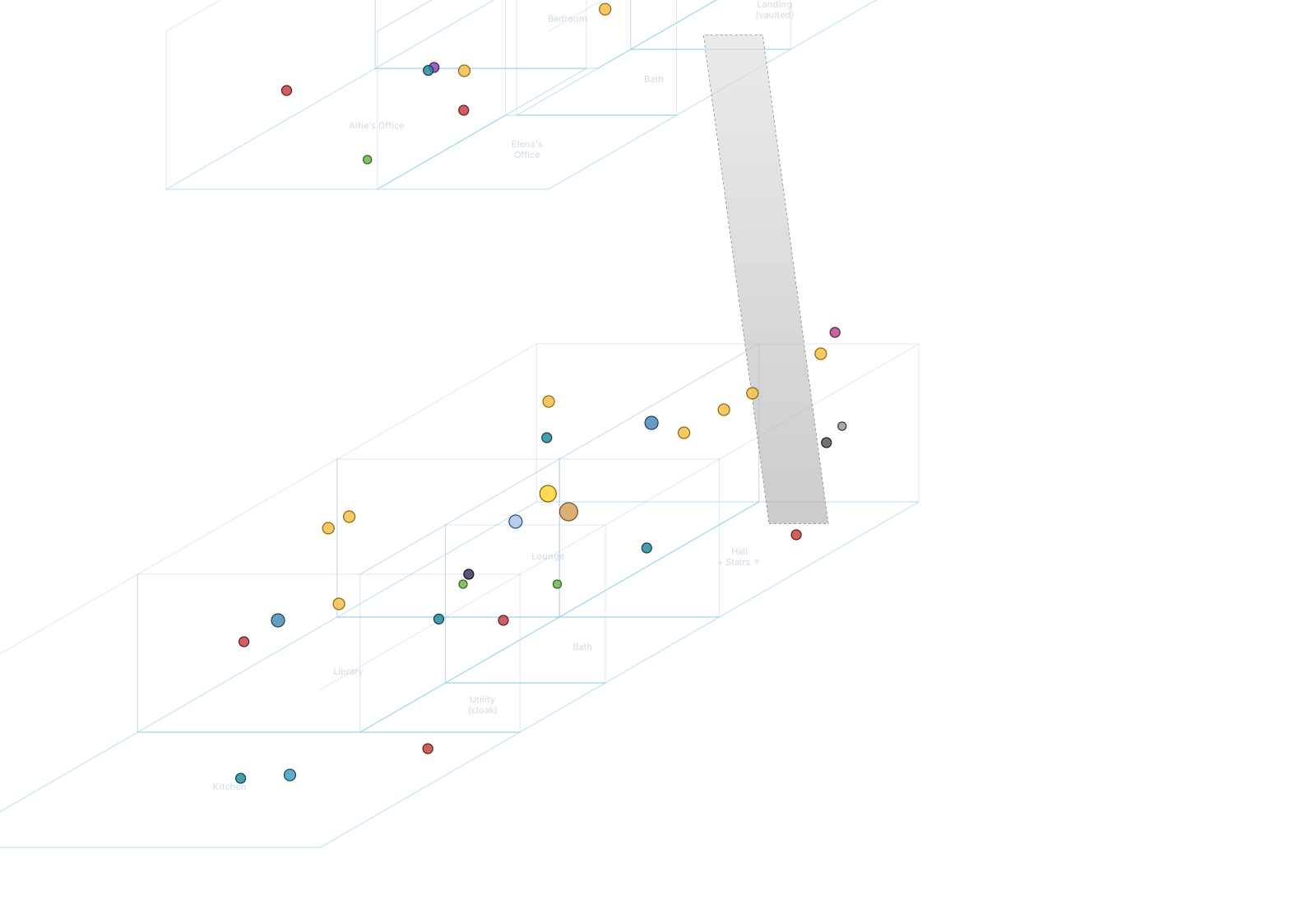
Most home-automation presence systems try to do two jobs at once. They use a single signal — Bluetooth, Wi-Fi, a phone’s GPS — to answer both is anyone here and which person is here. Bluetooth in particular is unreliable for this because every modern phone and watch rotates its MAC address every fifteen minutes, by design, to prevent exactly the kind of tracking smart-home systems try to do.
The studio’s presence model separates the two questions into two layers.
The presence layer uses millimetre-wave radar (Hi-Link LD2450) mounted in four of the house’s main rooms. Radar detects bodies — any body — at about eight readings a second, reporting position and Doppler speed. It does not know who anyone is. It is reliable at the question is there a body in this room? and excellent at the question how is it moving?. It is identity-blind by design.
The identity layer uses Bluetooth — but with a critical twist. Each wearable has a permanent cryptographic Identity Resolving Key, or IRK, which can be captured once with a brief sniffing procedure. Once the IRK is known, a custom firmware on six ESP32 nodes distributed through the house can resolve the rotating MAC addresses back to a stable identity, in real time. The identity is private — it cannot be tracked by anyone without the IRK. It survives MAC rotation, deep sleep, and most other things that defeat naïve Bluetooth tracking.
The two layers combine into a third sensor: per-room occupants. If the radar fires in the library and the identity layer says Alfie’s watch is in the library, the room reports [alfie]. If radar fires but no person is identified, it reports [unknown] — a guest, a pet, a reflection. If two people are identified in the same room and the radar reports two bodies, it reports [alfie, elena].
This is unusual enough to be worth saying plainly. Most homes that have radar do not have an identity layer. Most homes that have identity tracking use a method that defeats privacy. Combining IRK-resolved identity with radar presence gives a multi-person home the property of attribution — knowing who is where — without either compromising privacy or losing reliability.
The public repository ships three ESPHome firmware recipes (BLE-only proxy, BLE+LD2450 combined node, the IRK-capture rig used to read each wearable’s key once), three Home Assistant template-sensor variants for one-person, multi-person, and BLE-trilateration deployments, and the trap list — the eight gotchas that cost a day or more during the build, written down so you don’t have to spend yours.