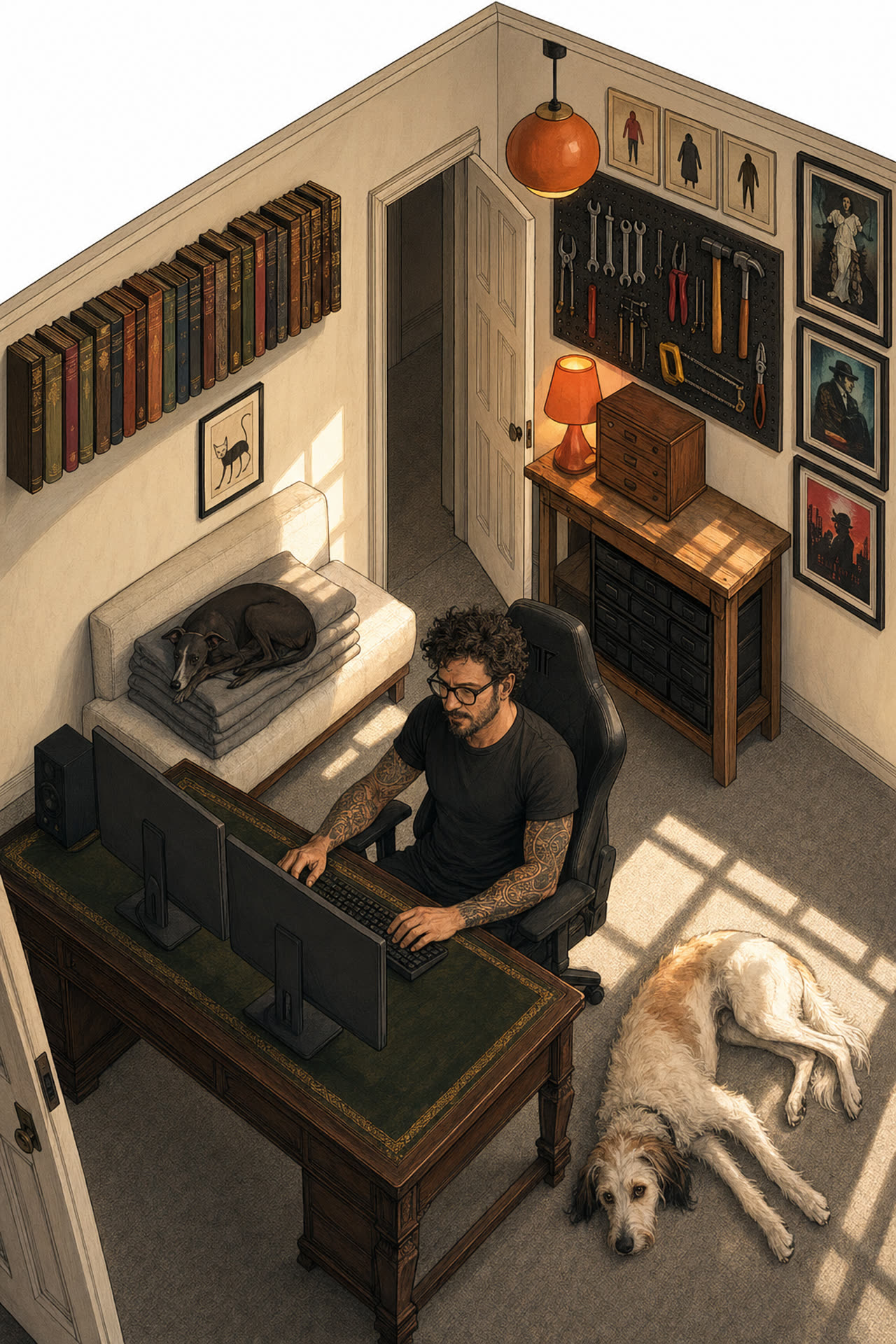
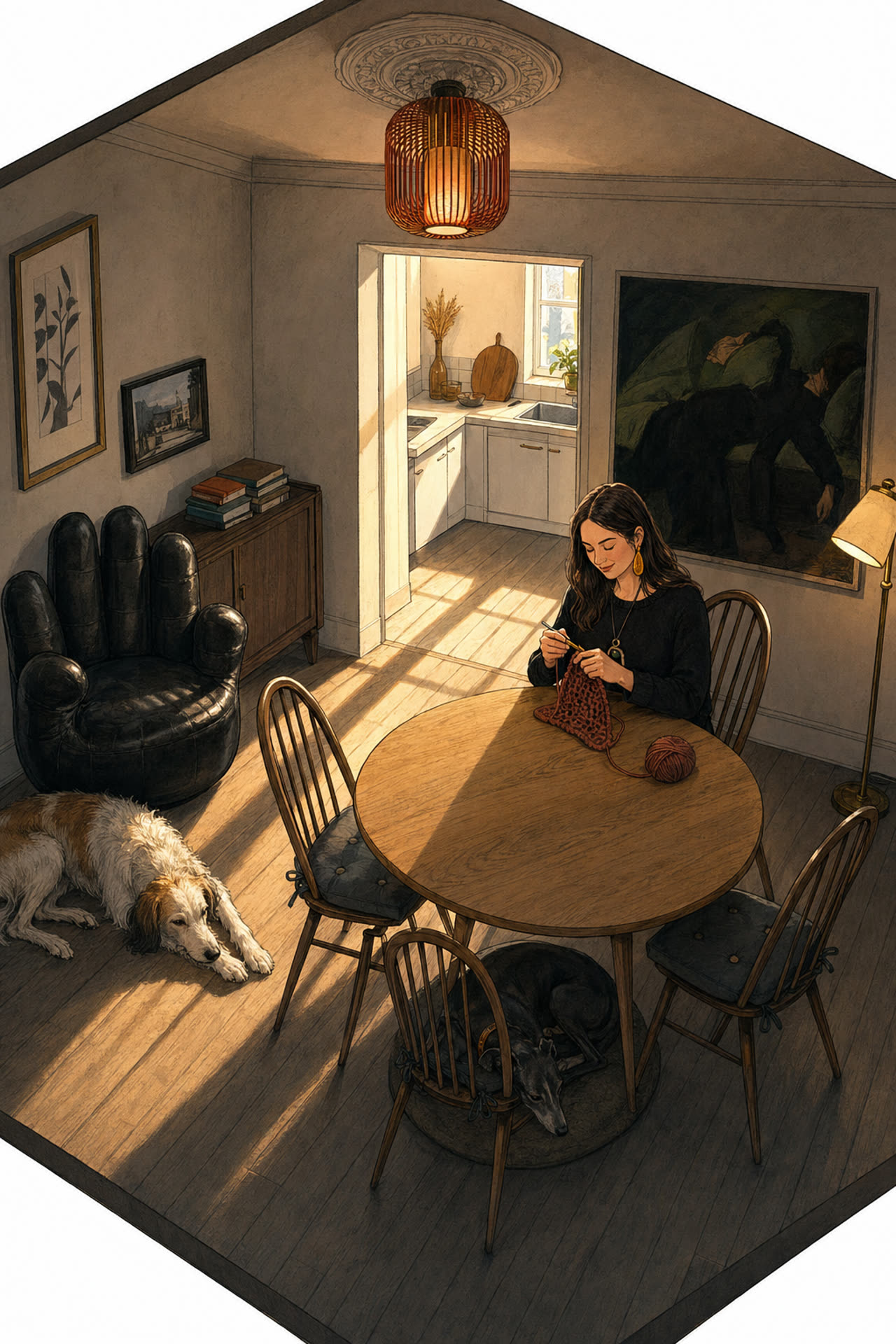
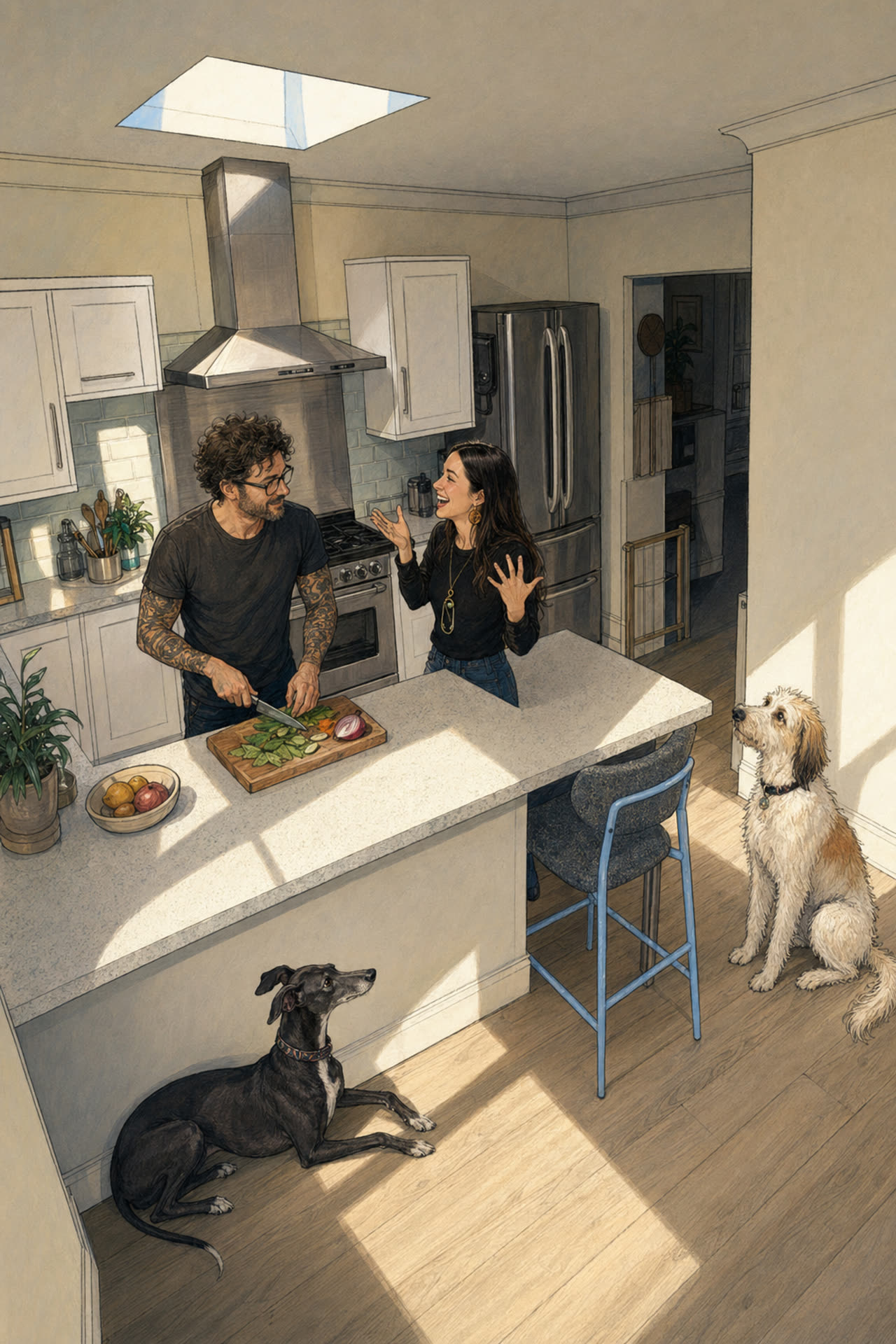
Emanations is a wall-mounted display in the upstairs hallway that shows a painting of the room you’re currently in. The painting changes when you change rooms. When both inhabitants of the house are in the same room, the painting changes again to show them both there together. When they’re in different rooms, the screen splits, and you see two paintings — one of each.
There are seventeen paintings in the studio’s collection. Five rooms — living room, kitchen, library, hallway, bedroom — each in three configurations (alone-A, alone-B, both-together), plus the two private offices for their solo views. Each painting was generated using gpt-image-2 with up to four reference photographs of the actual room, prompted to maintain the architectural details across configurations so the viewer recognises the same space whoever is in it.
Three of those paintings are shown here as illustration; the rest stay private to the studio (they depict household members).
The painted style sits between Edward Hopper and Monument Valley — flat axonometric perspective, warm interior light, a single occupant or two reading or making coffee or sitting on the floor. The reference for the lineage is BERG London’s Immaterials series and Marcin Wichary’s writing on what an ambient display can be. The emotional reference is the experience of moving through one’s own home and noticing, suddenly, a beam of late-afternoon sun in a room one had stopped seeing.
The system that drives the swap is a presence model — radar plus identity-resolved Bluetooth — that knows who is where with about a fifteen-second lag. The display crossfades when state changes, slowly, over about a second. Most of the time the display is still. When someone walks from the kitchen to the bedroom, the painting changes once, smoothly, while they’re in the corridor.
It is the quietest piece in the studio. It does not announce itself. It is also the piece visitors notice first.